
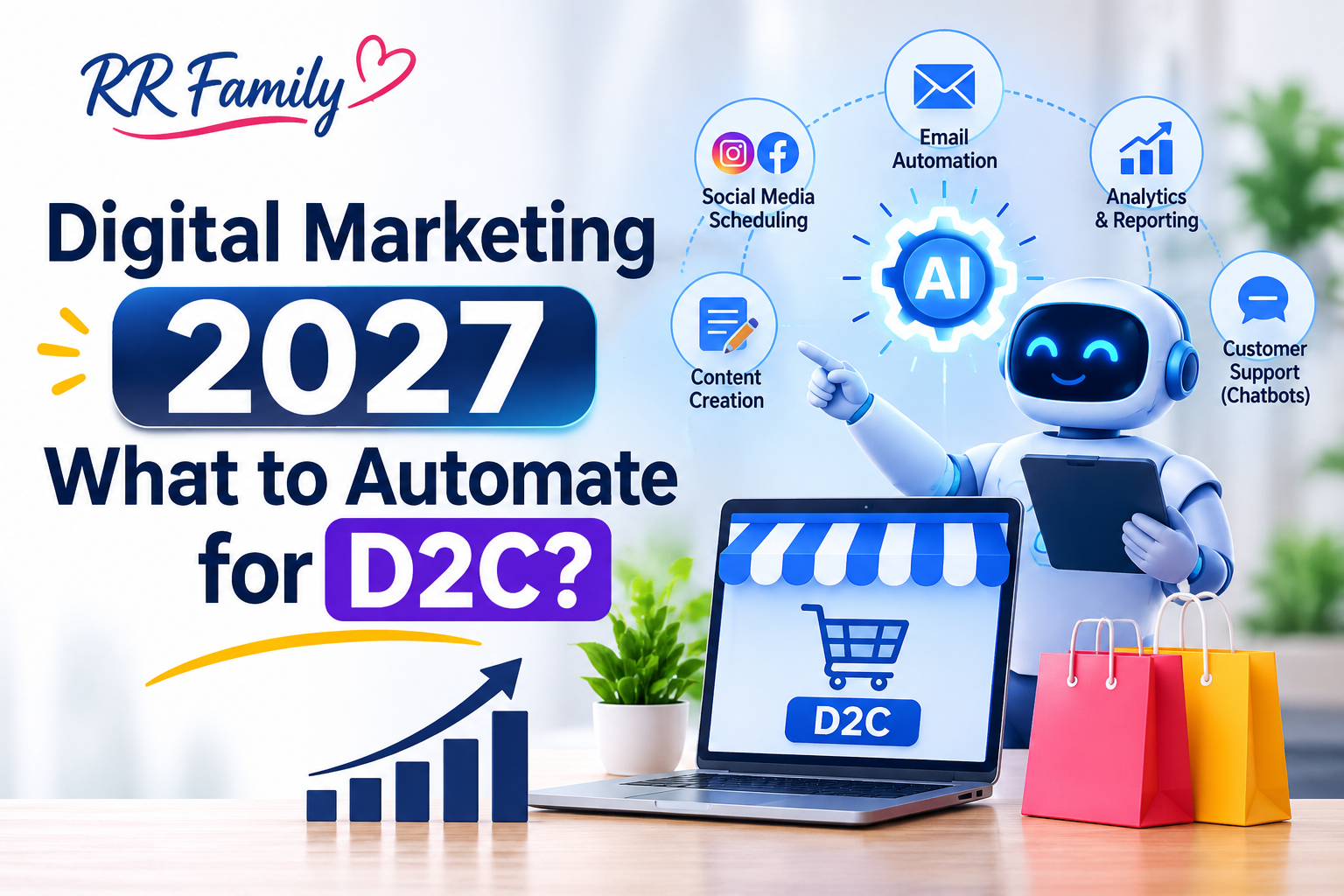
Introduction: The Great Algorithmic Homogenization
The Direct-to-Consumer (D2C) landscape has reached a defining crossroad. As we navigate 2027, the line between technology and human connection in marketing has been fundamentally redrawn.
Only a few short years ago, marketing automation was defined by basic email triggers, simple decision-tree chatbots, and scheduled social media queues. Today, agentic AI, predictive neural networks, real-time dynamic web rendering, and automated visual engines run vast portions of commercial operations with minimal human intervention. Brands can launch thousands of tailored ad variations, model customer churn months in advance, and deliver personalized product offers in milliseconds.
However, an unexpected and dangerous phenomenon has taken hold: The Great Algorithmic Homogenization.
When every brand leverages the same LLMs, optimization algorithms, and automated ad platforms, creative outputs merge into a seamless sea of high-converting mediocrity. D2C brands end up using identical copy formats, familiar dynamic visuals, and predictable chatbot personas. Consumers in 2027 suffer from intense “synthetic fatigue”—an instinctual ability to spot automated outreach, sterile corporate storytelling, and commoditized product copy.
When every competitor possesses access to high-powered AI capabilities, automation ceases to be a competitive edge—it becomes baseline table stakes.
The industry leaders of 2027 are not those who automate everything, nor are they the luddites who reject technology in the name of purity. The true market winners are Hybrid D2C Brands. These organizations follow a clear operational architecture: they ruthlessly automate efficiency while fiercely protecting and scaling human authenticity, emotional resonance, and strategic vision.
This comprehensive guide serves as an executive playbook for high-growth D2C brands, detailing what to delegate to machine intelligence, what to safeguard with human talent, and how to build an organizational model that scales both without compromise.
Executive Matrix: The 2027 D2C Operational Division
| Marketing Domain | What to Automate (Machine Intelligence) | What to Keep Human (Strategic & Emotional Core) | Key Operational Metric |
| Strategy & Positioning | Market sentiment scraping, competitor pricing analysis, trend prediction | Core value definition, mission alignment, pivot decisions, category creation | Customer Acquisition Cost (CAC) Efficiency vs. Brand Equity |
| Content Creation | Scale variants, ad adaptations, dynamic creative optimization (DCO), localization | Brand voice definition, narrative storytelling, founder perspective, artistic vision | Creative Refresh Speed vs. Content Engagement Depth |
| Customer Experience (CX) | Order tracking, routine returns, basic product discovery, dynamic FAQs | VIP clienteling, complex crisis management, community nurturing, physical activations | Resolution Time vs. Net Promoter Score (NPS) / Emotional Loyalty |
| Paid Media & Growth | Bid adjustments, audience targeting, dynamic budget allocation, format sizing | Creative brief generation, high-level positioning, channel expansion strategy | Return on Ad Spend (ROAS) vs. Marginal Contribution Margin |
| Data & Analytics | Multi-touch attribution models, predictive LTV calculation, churn signals | Nuanced qualitative insight synthesis, ethical data governance, long-term forecasting | Data Accuracy vs. Strategic Insight Value |
Part 1: The Automation Imperative (Delegating Scale & Speed)
In 2027, manual execution in routine marketing operations is no longer just inefficient—it is economically unviable. D2C brands must automate tasks where computers inherently outpace human abilities: analyzing vast unstructured datasets, generating high-volume variations, and executing real-time personalizations at scale.
       ┌────────────────────────────────────────────────────────┐
       │                HIGH DATA / HIGH REPETITION             │
       └───────────────────────────┬────────────────────────────┘
                                   │
                                   ▼
        ┌──────────────────────────────────────────────────────┐
        │           AUTOMATION ENGINE (Agentic AI)             │
        ├──────────────────────────────────────────────────────┤
        │ • Predictive LTV & Churn Prevention                  │
        │ • Dynamic Creative Optimization (DCO)                │
        │ • First-Line CX & Returns Management                 │
        │ • Technical SEO & Dynamic Schema Markup              │
        │ • Hyper-Personalized Post-Purchase Flow              │
        └──────────────────────────────────────────────────────┘
1. Predictive Customer Lifetime Value (LTV) and Churn Prevention
Static customer segmentation (demographics, location, basic order history) is obsolete. Modern D2C brands utilize real-time neural models that process micro-behavioral signals to anticipate customer value and retention risks.
What Machines Excel At:
- Real-Time Behavior Tracking: AI models track subtle shifts in customer activity—such as drop-offs in site visits, reduced interaction with emails, or changing browsing speed—identifying churn risk weeks before a customer actively decides to cancel or leave.
- Automated Re-engagement Triggers: The system automatically deploys personalized retention sequences based on individual preferences (e.g., offering an exclusive product preview to a high-value customer versus offering a alternative billing frequency to a subscription customer).
- Margin-Optimized Discounting: Rather than issuing sitewide promos, machine learning algorithms calculate the minimum incentive required to convert a specific user segment, preserving profit margins.
2. Micro-Ad Iteration and Dynamic Creative Optimization (DCO)
While humans design the primary creative vision, machines excel at producing and testing variations at scale across digital channels.
What Machines Excel At:
- High-Volume Visual Adaptations: Automatically rendering core campaign assets into hundreds of aspect ratios, formats, and language variations for platforms spanning short-form feeds, visual commerce networks, and spatial computing interfaces.
- Multivariate Visual & Copy Testing: Dynamically swapping backgrounds, color schemes, voiceover tracks, and call-to-action (CTA) placements based on real-time viewer engagement metrics.
- Rapid Allocation: Identifying underperforming ad variations within hours of launch and automatically reallocating media spend toward higher-performing creative assets.
3. Tier-1 and Tier-2 Customer Support Infrastructure
In 2027, consumers expect immediate support. AI-driven support agents handle the vast majority of transactional inquiries instantly, allowing human teams to focus on complex, high-touch interactions.
                  ┌──────────────────────────────┐
                  │    Incoming Support Query    │
                  └──────────────┬───────────────┘
                                 │
                   ┌─────────────┴─────────────┐
                   ▼                           ▼
        ┌────────────────────┐       ┌────────────────────┐
        │   Transactional    │       │ Complex / Emotional│
        │   (Tier-1/Tier-2)  │       │ (High VIP / Escal) │
        └──────────┬─────────┘       └──────────┬─────────┘
                   │                           │
                   ▼                           ▼
        ┌────────────────────┐       ┌────────────────────┐
        │  AUTONOMOUS AGENT  │       │ HUMAN SPECIALIST   │
        │ • Shipping status  │       │ • Escalated issue  │
        │ • Routine returns  │       │ • VIP consultation │
        │ • Product FAQs     │       │ • Custom solutions │
        └────────────────────┘       └────────────────────┘
What Machines Excel At:
- Order Logistics & Tracking: Delivering instant updates on order processing, fulfillment routing, and delivery status across chat, SMS, and messaging platforms.
- Automated Returns & Exchanges: Guiding customers through returns or exchanges using computer vision to evaluate uploaded photos of damaged goods and issue replacements immediately.
- Contextual Product Guidance: Answering specific product queries using real-time inventory and spec data (e.g., matching a skin type with a suitable formulation).
4. Technical Search Optimization and Dynamic Content Structuring
Search engines in 2027 operate on multimodal AI models and direct synthesis engines. Maintaining search visibility requires continuous, automated technical maintenance.
What Machines Excel At:
- Dynamic Schema Generation: Automatically updating product schema, stock updates, pricing models, and video markup as inventory changes.
- Localized Translation & Cultural Adaptation: Translating product catalogs, technical specs, and site copy into dozens of languages while adjusting currency, measurement systems, and regional formatting.
- Site Infrastructure Health: Monitoring page load speeds, resolving broken routes, and ensuring site structures remain optimized for AI search crawlers.
5. Hyper-Personalized Post-Purchase Journeys
The post-purchase period is critical for driving customer LTV. Automation allows brands to deliver highly contextual, individualized post-purchase experiences.
What Machines Excel At:
- Customized Usage Schedules: Sending automated setup guides, usage tips, and follow-ups timed to when the customer receives and starts using their product.
- Replenishment Signals: Calculating usage rates based on order quantity and sending timely reorder prompts via the customer’s preferred communication channel.
- Cross-Sell Recommendations: Suggesting complementary products that genuinely align with past purchases rather than static cross-sell rules.
Part 2: The Human Sanctuary (Safeguarding Voice, Heart, and Strategy)
While automation scales operational efficiency, relying solely on AI leads to generic content and weakened customer loyalty. Certain core business functions demand human intuition, creativity, and empathy.
       ┌────────────────────────────────────────────────────────┐
       │             HIGH EMOTION / HIGH STRATEGY               │
       └───────────────────────────┬────────────────────────────┘
                                   │
                                   ▼
        ┌──────────────────────────────────────────────────────┐
        │                 HUMAN CREATIVE CORE                  │
        ├──────────────────────────────────────────────────────┤
        │ • Brand Narrative & Origin Storytelling              │
        │ • Product Innovation & Formulations                  │
        │ • Community Cultivation & Physical Events            │
        │ • High-Stakes PR & Strategic Positioning             │
        │ • VIP Concierge & Emotional Conflict Resolution      │
        └──────────────────────────────────────────────────────┘
1. Brand Narrative, Origin Stories, and Purpose
AI tools construct content based on existing patterns. They cannot synthesize authentic personal experiences, genuine brand origin stories, or deeply held company values.
Why Humans Must Lead:
- Emotional Resonance: Customers connect with real human stories, personal challenges, and clear values. Synthetic origin stories rarely build deep emotional trust.
- Cultural Nuance: Understanding cultural shifts, social movements, and subcultures requires authentic human lived experience.
- Authentic Leadership: Founders and team members who share their real journey, mistakes, and successes create strong brand affinity that algorithms cannot duplicate.
           AI CREATIVE GENERATION              HUMAN NARRATIVE CREATION
       ┌────────────────────────────┐      ┌────────────────────────────┐
       │ • Aggregates existing data │      │ • Expresses real experience│
       │ • Optimizes for patterns   │      │ • Drives cultural shifts   │
       │ • High volume output       │      │ • Deep emotional trust     │
       └────────────────────────────┘      └────────────────────────────┘
                     │                                   │
                     ▼                                   ▼
          Commercially Generic                 Authentic Brand Loyalty
2. Groundbreaking Product Innovation and Category Creation
AI models analyze existing market data to suggest incremental product tweaks. However, true category-defining innovation requires original human vision and intuitive market insights.
Why Humans Must Lead:
- Unspoken Customer Needs: Customers often struggle to articulate novel problems. Identifying these unspoken needs requires observation and empathy rather than data analysis alone.
- Unconventional Product Design: Breakthrough products often counter existing market data trends. Relying strictly on data-driven design leads to incremental iterations rather than market disruption.
- Tactile Quality & Craftsmanship: In physical product categories—such as apparel, food, beauty, and home goods—sensory testing, texture, and physical craftsmanship require human judgment.
3. VIP Clienteling and High-Touch Resolution
Automated support handles routine transactions efficiently, but high-value customers and complex issues require genuine human empathy and authority.
Why Humans Must Lead:
- High-Value VIP Retention: Top-tier customers generate a disproportionate share of brand margin. Providing dedicated human concierge services reinforces their value to the brand.
- Empathy During Escalations: When shipping failures, product defects, or service mistakes occur, an automated response can escalate frustration. An empowered human agent can resolve the issue and rebuild trust.
- Unscripted Relationship Building: Authentic conversations often yield valuable qualitative feedback and build lasting brand advocacy.
4. Community Cultivation and Physical Brand Activations
In an increasingly digital world, consumers value real-world experiences, physical touchpoints, and authentic community connections.
                               ┌───────────────────────────┐
                               │ Real-World Brand Presence │
                               └─────────────┬─────────────┘
                                             │
                       ┌─────────────────────┴─────────────────────┐
                       ▼                                           ▼
         ┌───────────────────────────┐               ┌───────────────────────────┐
         │     Physical Touches      │               │   Community Gatherings    │
         ├───────────────────────────┤               ├───────────────────────────┤
         │ • Pop-up retail shops     │               │ • Founder meetups         │
         │ • Sensory product hubs    │               │ • Customer roundtables    │
         │ • Unboxing experiences    │               │ • Local user groups       │
         └───────────────────────────┘               └───────────────────────────┘
Why Humans Must Lead:
- In-Person Connection: Host offline gatherings, pop-up events, customer roundtables, and regional meetups where community members can connect directly with the team.
- Authentic Ambassador Relationships: Building genuine relationships with creators, partners, and community leaders requires trust, mutual respect, and shared goals.
- Community Moderation & Culture: Cultivating positive online spaces requires nuanced, empathetic human moderation that algorithms cannot replicate.
5. High-Stakes Public Relations, Crisis Management, and Ethics
When brand reputation is on the line, relying on automated communication or rigid scripts can lead to major PR missteps.
Why Humans Must Lead:
- Crisis Navigation: Managing public issues, supply chain disruptions, or controversial topics requires genuine accountability, speed, and executive judgment.
- Ethical Boundary Setting: Defining clear principles around data privacy, ingredient sourcing, labor standards, and marketing ethics requires executive accountability.
- Strategic Brand Positioning: Deciding when to pivot product lines, adjust brand messaging, or enter new markets requires cross-functional human strategy.
Part 3: The 2027 Hybrid Framework (Implementation & Architecture)
To blend machine efficiency with human creativity successfully, D2C brands need a structured operational framework. The 5-Tier D2C Marketing Architecture establishes clear guidelines for delegating responsibilities across the organization.
       ┌────────────────────────────────────────────────────────┐
       │ LEVEL 5: STRATEGIC & ETHICAL GOVERNANCE                │ 100% Human
       ├────────────────────────────────────────────────────────┤
       │ LEVEL 4: CREATIVE VISION & HERO NARRATIVE              │ 80% Human / 20% AI
       ├────────────────────────────────────────────────────────┤
       │ LEVEL 3: COMMUNITY & VIP RELATIONSHIP MANAGEMENT        │ 50% Human / 50% AI
       ├────────────────────────────────────────────────────────┤
       │ LEVEL 2: DYNAMIC CREATIVE & MULTIVARIATE EXECUTION      │ 20% Human / 80% AI
       ├────────────────────────────────────────────────────────┤
       │ LEVEL 1: REPETITIVE INFRASTRUCTURE & DATA ROUTING      │ 100% Automated
       └────────────────────────────────────────────────────────┘
The 5-Tier D2C Marketing Architecture
Level 1: Fully Automated Operations ($100\%$ Machine Executed)
- Scope: Server health, technical search markup, transactional messaging, routine returns processing, dynamic audience segmentation, and spend rebalancing.
- Human Role: System monitoring, boundary setting, and quarterly auditing.
Level 2: AI-Driven with Human Oversight ($80\%$ Machine / $20\%$ Human)
- Scope: Ad creative sizing, catalog updates, translated copy, and dynamic email flows.
- Human Role: Creative direction, brand voice review, and asset approval.
Level 3: Balanced Human-Machine Collaboration ($50\%$ Machine / $50\%$ Human)
- Scope: Mid-funnel customer support, automated loyalty triggers, re-engagement programs, and creator campaign tracking.
- Human Role: Managing customer escalations, nurturing partner relationships, and reviewing qualitative feedback.
Level 4: Human-Led with AI Support ($20\%$ Machine / $80\%$ Human)
- Scope: Hero campaign development, core brand copy, brand storytelling, flagship product launches, and high-tier VIP outreach.
- Human Role: Strategy, creative concept development, narrative crafting, and personal client communication.
- Machine Role: Audience insight gathering, copy proofing, and asset variations.
Level 5: Exclusively Human Governance ($100\%$ Human Executed)
- Scope: Core mission, brand positioning, ethics standards, physical activations, and crisis communications.
- Machine Role: None.
Part 4: Real-World Case Studies (2027 Market Leaders)
Evaluating actual business operations illustrates how this balance functions in practice.
                 CASE STUDY 1: LUMINA SKINCARE (BEAUTY)
   ┌─────────────────────────────────────────────────────────────────┐
   │ AUTOMATED: Skin analysis, formulation matching, re-order flows  │
   │ HUMAN:     Dermatologist consultations, community forums        │
   │ RESULT:    38% Increase in LTV | 42% Reduction in CAC           │
   └─────────────────────────────────────────────────────────────────┘

                 CASE STUDY 2: AURA ATHLETICS (APPAREL)
   ┌─────────────────────────────────────────────────────────────────┐
   │ AUTOMATED: DCO ads, stock allocations, sizing returns           │
   │ HUMAN:     Local run clubs, athlete stories, product design     │
   │ RESULT:    4.2x ROAS | 68% Repeat Purchase Rate                 │
   └─────────────────────────────────────────────────────────────────┘
Case Study 1: Lumina Skincare (Personalized Beauty)
- Background: Lumina Skincare scaled beyond $\$50\text{M}$ in Annual Recurring Revenue (ARR) by automating personalized skin assessments while investing heavily in human expertise.
The Automation Architecture:
- Deployed an AI skin diagnostic tool that analyzes photo uploads to generate custom formulation profiles instantly.
- Automated personalized replenishment reminders based on individual product usage rates.
- Streamlined routine order tracking and subscription modifications through automated support workflows.
The Human Sanctuary:
- Connected customers experiencing severe skin issues directly with licensed human dermatologists via video consultations.
- Hosted monthly founder-led live Q&A sessions focused on skincare science and holistic health.
- Built a private community moderated by human brand ambassadors who offer tailored encouragement and product advice.
Results:
- $38\%$ Increase in 12-Month LTV driven by higher subscription retention.
- $42\%$ Reduction in CAC powered by word-of-mouth referral growth within their hosted community.
- Sub-1-Minute Resolution Time for over $85\%$ of customer service inquiries.
Case Study 2: Aura Athletics (Performance Apparel)
- Background: Facing high digital ad costs, Aura Athletics restructured its growth engine to separate dynamic ad production from core brand storytelling.
The Automation Architecture:
- Used AI creative engines to generate over 1,000 ad variants weekly from a single hero brand photo shoot.
- Automated budget management across multiple paid channels based on real-time contribution margin targets.
- Implemented automated return and exchange tools that process size swaps instantly without friction.
The Human Sanctuary:
- Directed creative resources toward producing documentary-style films profiling local endurance athletes.
- Built and managed physical run clubs across 15 major metro areas led by local community leaders.
- Kept product innovation centered around direct physical feedback from elite athlete wear-testers.
Results:
- $4.2\times$ Blended ROAS sustained despite rising industry CPM costs.
- $68\%$ Repeat Purchase Rate within 180 days, anchored by physical community hubs.
- Zero customer fatigue penalties across major ad networks due to automated creative variance.
Part 3: Operational Blueprint – Building Your 2027 Hybrid Team
Transitioning to a hybrid model requires updating organizational roles, talent allocation, and operational workflows.
                  OLD D2C TEAM vs. 2027 HYBRID TEAM

       OLD MODEL                            2027 HYBRID MODEL
┌──────────────────────────┐          ┌──────────────────────────┐
│ • Manual Media Buyers    │          │ • Growth Systems Engineers│
│ • Production Copywriters │    ───►  │ • Narrative Storytellers │
│ • Routine Support Reps   │          │ • VIP Relationship Mgrs  │
│ • Static Data Analysts   │          │ • Qualitative Researchers│
└──────────────────────────┘          └──────────────────────────┘
1. Evolving Roles and Skillsets
Growth Systems Engineers (Formerly Media Buyers)
Instead of manually tweaking campaign bids and ad placements, growth marketers manage machine models, establish spending parameters, and build data pipelines across marketing channels.
Brand Narrative Architects (Formerly Production Copywriters)
Rather than writing repetitive ad variations or generic SEO articles, writers focus on high-impact brand storytelling, campaign hooks, executive ghostwriting, and deep-dive editorial content.
Community & VIP Clienteling Specialists (Formerly Tier-1 Support Reps)
As AI handles routine ticket resolution, customer service professionals shift into proactive relationship managers, community moderators, and high-value concierge guides.
Qualitative Data Synthesizers (Formerly Static Data Analysts)
Analysts look beyond basic metrics, combining automated quantitative data with direct customer feedback, interviews, and cultural insights to inform business strategy.
2. The Creative Workflow: Human Concept to Machine Scale
High-performing hybrid teams use a structured process to translate creative vision into automated execution:
┌─────────────────────────────────────────────────────────────────┐
│ STEP 1: HUMAN VISION                                            │
│ Team defines campaign concept, emotional core, and hero assets. │
└───────────────────────────────┬─────────────────────────────────┘
                                │
                                ▼
┌─────────────────────────────────────────────────────────────────┐
│ STEP 2: MACHINE EXPANSION                                       │
│ AI renders variants, resizes formats, and adapts regional copy. │
└───────────────────────────────┬─────────────────────────────────┘
                                │
                                ▼
┌─────────────────────────────────────────────────────────────────┐
│ STEP 3: HUMAN AUDIT                                             │
│ Lead Editor reviews variants for brand voice and quality.       │
└───────────────────────────────┬─────────────────────────────────┘
                                │
                                ▼
┌─────────────────────────────────────────────────────────────────┐
│ STEP 4: AUTOMATED DEPLOYMENT & OPTIMIZATION                     │
│ Systems test variations and reallocate budget in real time.      │
└───────────────────────────────┬─────────────────────────────────┘
                                │
                                ▼
┌─────────────────────────────────────────────────────────────────┐
│ STEP 5: HUMAN INSIGHT SYNTHESIS                                 │
│ Team reviews performance data to inform the next creative cycle. │
└─────────────────────────────────────────────────────────────────┘
Part 6: Future-Proofing Strategy (Avoiding Common Pitfalls)
As D2C brands scale their automation capabilities, leadership teams must navigate three major strategic risks:
Pitfall 1: Over-Automating Brand Touchpoints
- The Risk: Offloading all customer interactions—including social media comments, VIP communications, and public relations—to AI agents, resulting in an unfeeling brand persona.
- The Solution: Establish strict brand governance rules. Maintain human ownership over public social channels, community hubs, high-value client outreach, and brand stance announcements.
Pitfall 2: Metric Myopia Driven by Algorithms
- The Risk: Allowing optimization models to chase short-term conversions, which can result in aggressive discounting, sensationalist ad creative, and long-term brand erosion.
- The Solution: Set firm algorithmic boundaries based on target contribution margin, brand safety guidelines, and customer lifetime value metrics rather than raw conversion volume alone.
Pitfall 3: Neglecting First-Party Data Quality
- The Risk: Feeding low-quality, inaccurate, or biased data into automated marketing engines, leading to poor targeting and incorrect customer predictions.
- The Solution: Invest in robust data hygiene, clear consent frameworks, and direct zero-party data collection strategies (e.g., interactive quizzes, post-purchase surveys, direct preference centers).
Conclusion: The Authentic Future of Direct-to-Consumer Growth
As we look toward the remainder of 2027 and beyond, the goal for D2C leaders is not to build an automated company, nor is it to resist technological change.
The goal is to build an augmented brand.
By delegating processing tasks, micro-iterations, routine logistics, and performance tracking to modern automation infrastructure, you free up organizational time, energy, and capital. D2C teams can reinvest these valuable resources into what truly drives brand longevity: unmatched product quality, memorable creative storytelling, vibrant physical communities, and genuine human empathy.
Automation provides efficiency, speed, and operational scale. Human creativity provides meaning, differentiation, and lasting brand loyalty.
Brands that master this balance will not merely survive the algorithmic era—they will build enduring, high-margin businesses that stand out in a crowded marketplace.

Leave a Reply